

CYD Campus examines the cyber security research landscape in Switzerland
Research in the area of cyber security is an important pillar in protection against cyber threats. The study compiled by armasuisse Science and Technology provides the first quantitative assessment of the Swiss cyber security research landscape by evaluating the full-time equivalents in various different research areas. It aims to serve as a basis for political decision-makers, universities, industry and funding organisations, to address potential imbalances in research, to create incentives for strategic areas and to identify possible blind spots.
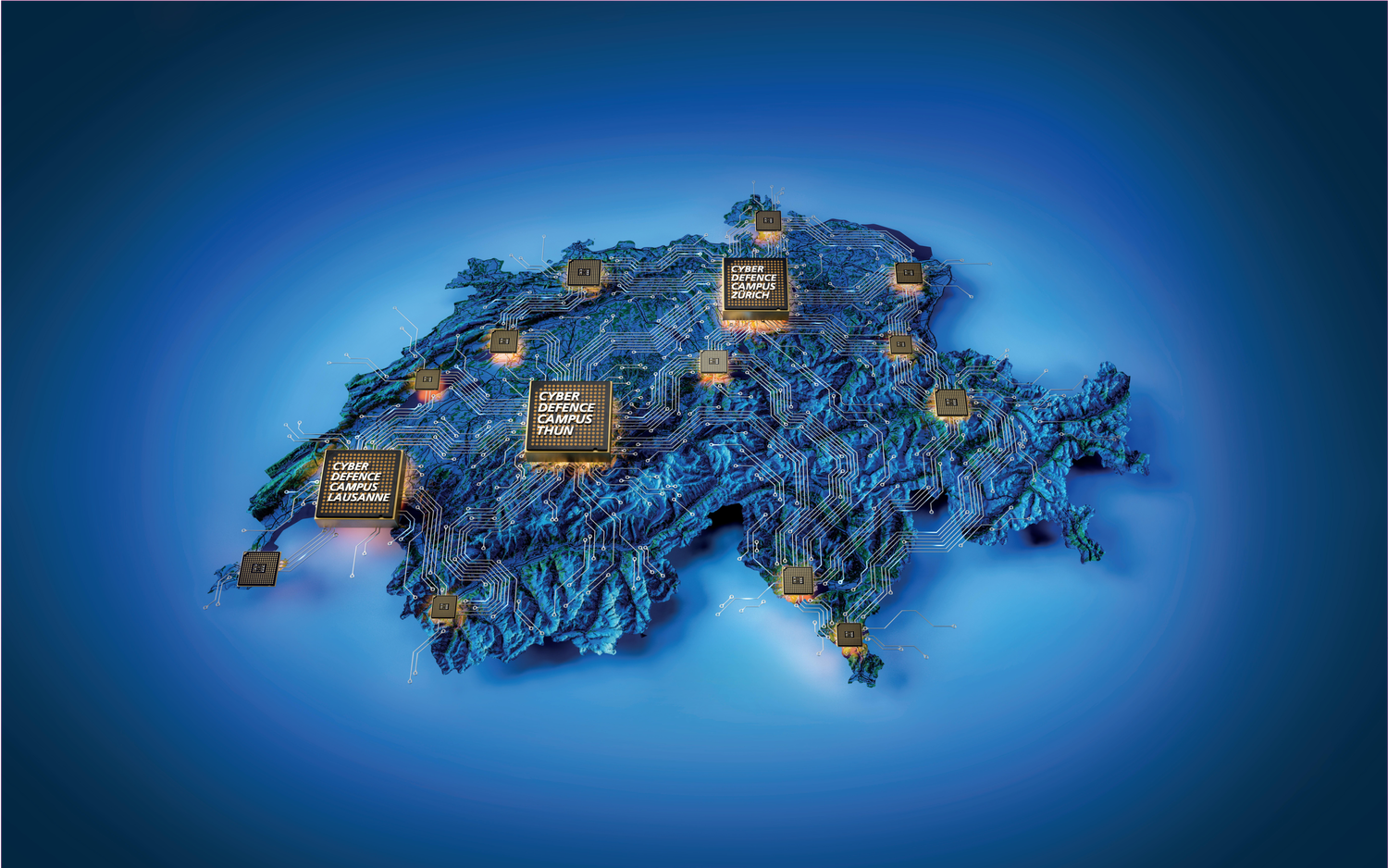
The study evaluates the workforce (in other words, the full-time equivalents) in the academic cyber security research at all Swiss universities. The field of cyber security is divided into 14 research areas. Detailed statistics will be published on which university researches in which areas of research.
The National Cyber Strategy of Switzerland (NCS) underscores the central role of cyber security research for defence against digital threats, economic growth and the innovation strength of Switzerland. But what about national research on cyber security? Who invests how much in which areas? These questions are difficult to answer as Swiss universities and research institutions enjoy a broad autonomy in the definition of their research focuses.
Together with other organisations, the CYD Campus of armasuisse Science and Technology takes a leading role with various NCS measures and was first confronted with the problem of data collection. It therefore carried out an extensive quantitative study on cyber security research in Switzerland together with the Swiss Academy of Engineering Sciences (SATW).
In the study, 22 Swiss universities were surveyed and their research activities in 14 different areas of cyber security research examined. The results show that Switzerland employs altogether 297 full-time equivalents (FTE) in academic cyber security research.
The study also shows that the Swiss research landscape is very inconsistent in the area of cyber security. While a lot is invested in certain areas, little attention is paid to others. The three most important areas, in other words, software and hardware security technology, cryptology as well as network and distributed systems with 174 FTE thus account for the majority of research efforts. In contrast to this, the five least researched areas, such as Security Management and Governance, come to a combined total of 7.2 FTE. Measured against the number of universities involved, the research area networks and distributed systems is the most popular – no fewer than nine universities are actively participating in this area.
This study provides an important database for political decision-makers, universities and stakeholder groups from industry and funding institutes. Now imbalances can be discussed, strategic areas specifically strengthened and potential blind spots identified, with the goal of positioning Switzerland as one of the leading countries in the global cyber security landscape.