Cyber-Defence Campus Technology Day
On Wednesday, 21 May 2025, the Technology Day of the Cyber-Defence Campus provided a practical demonstration of the technological innovations that already exist today and will be necessary for use tomorrow.
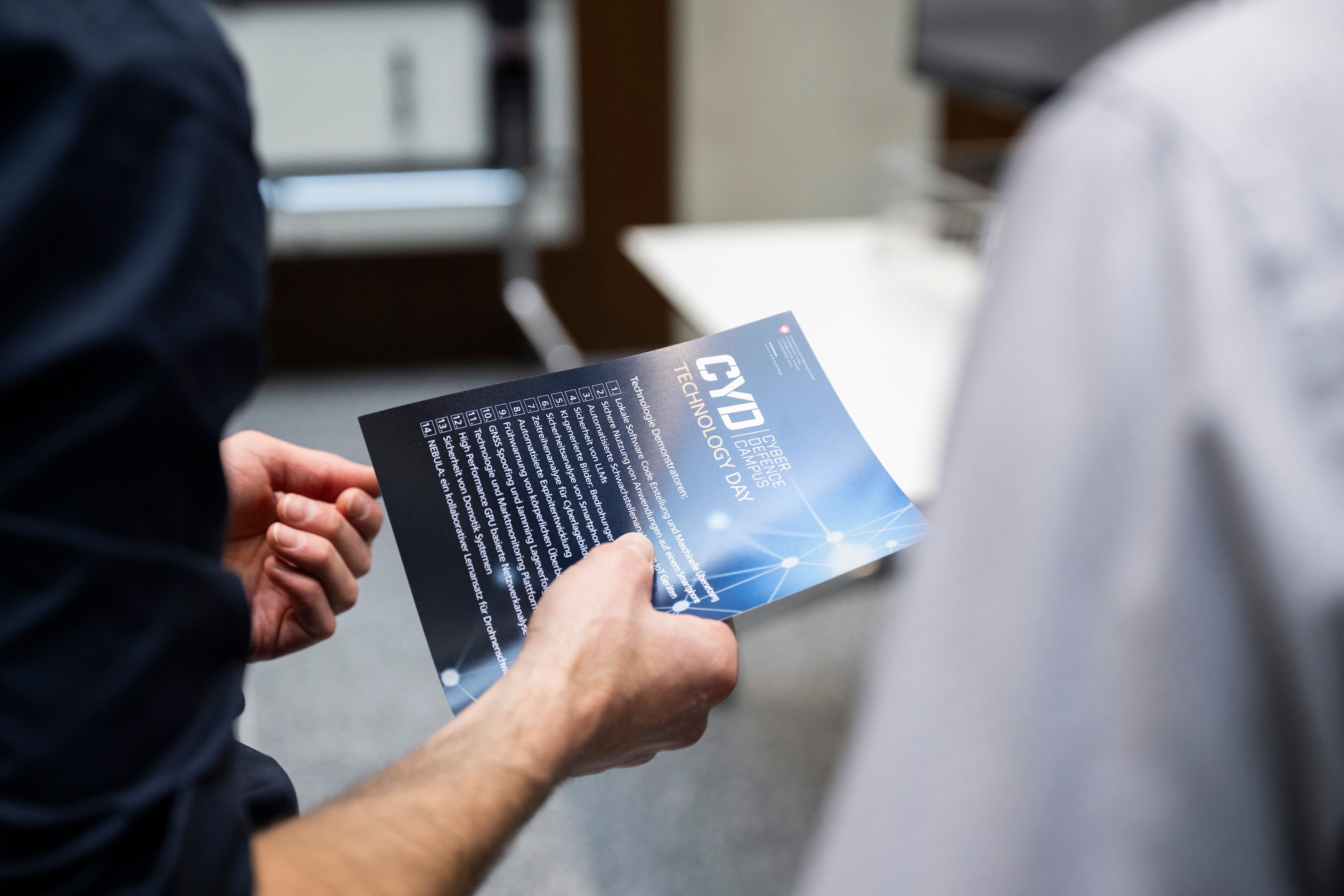
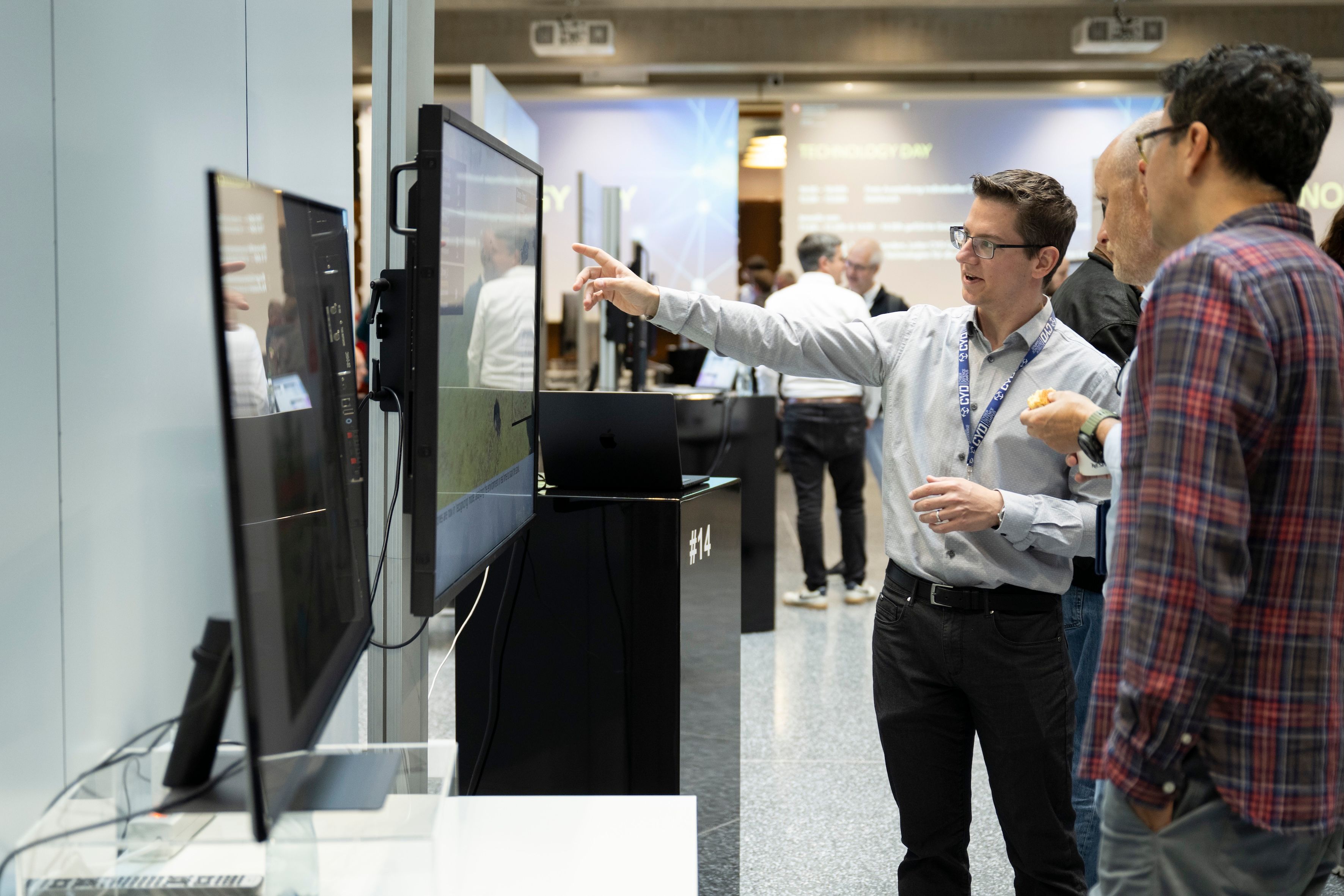
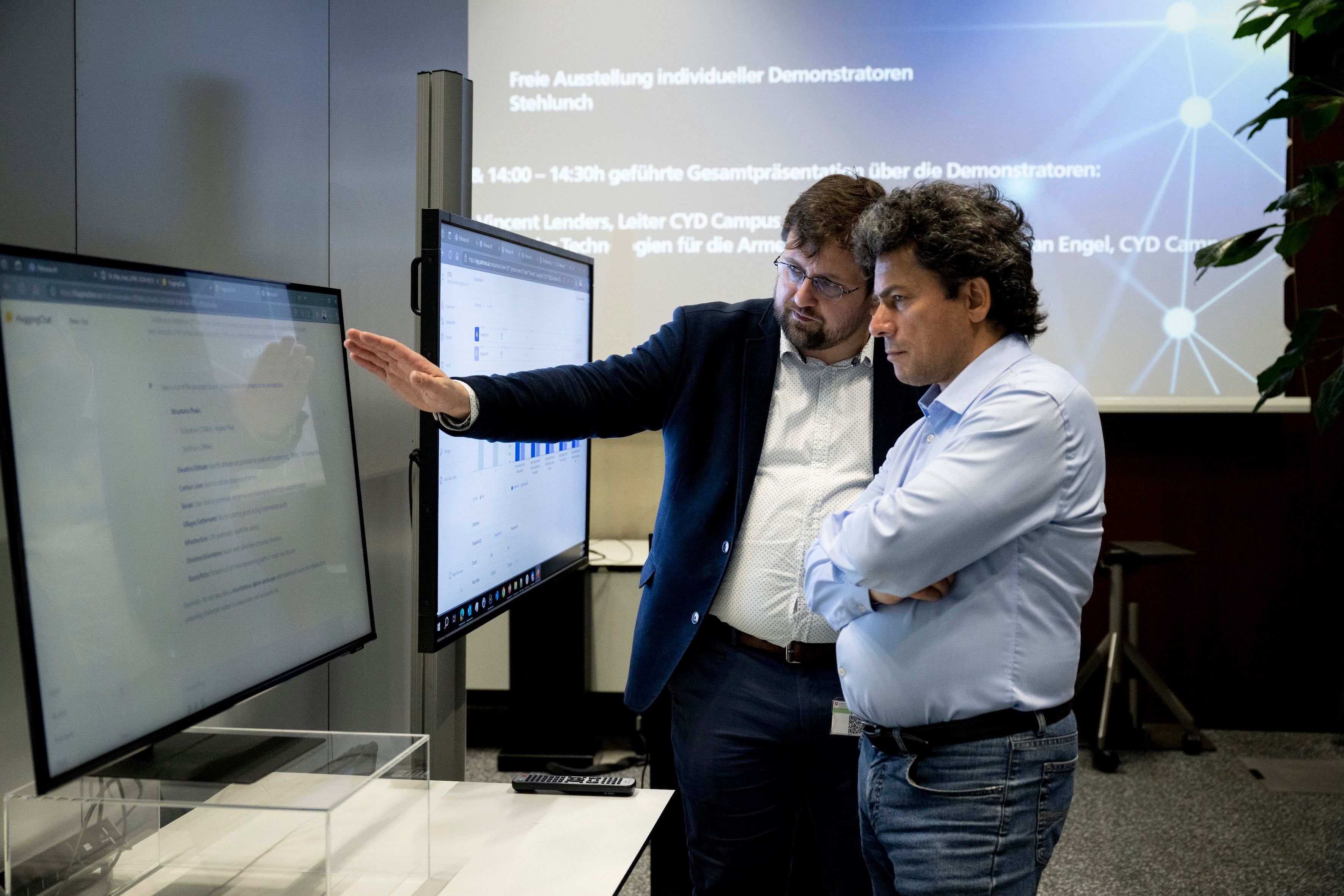
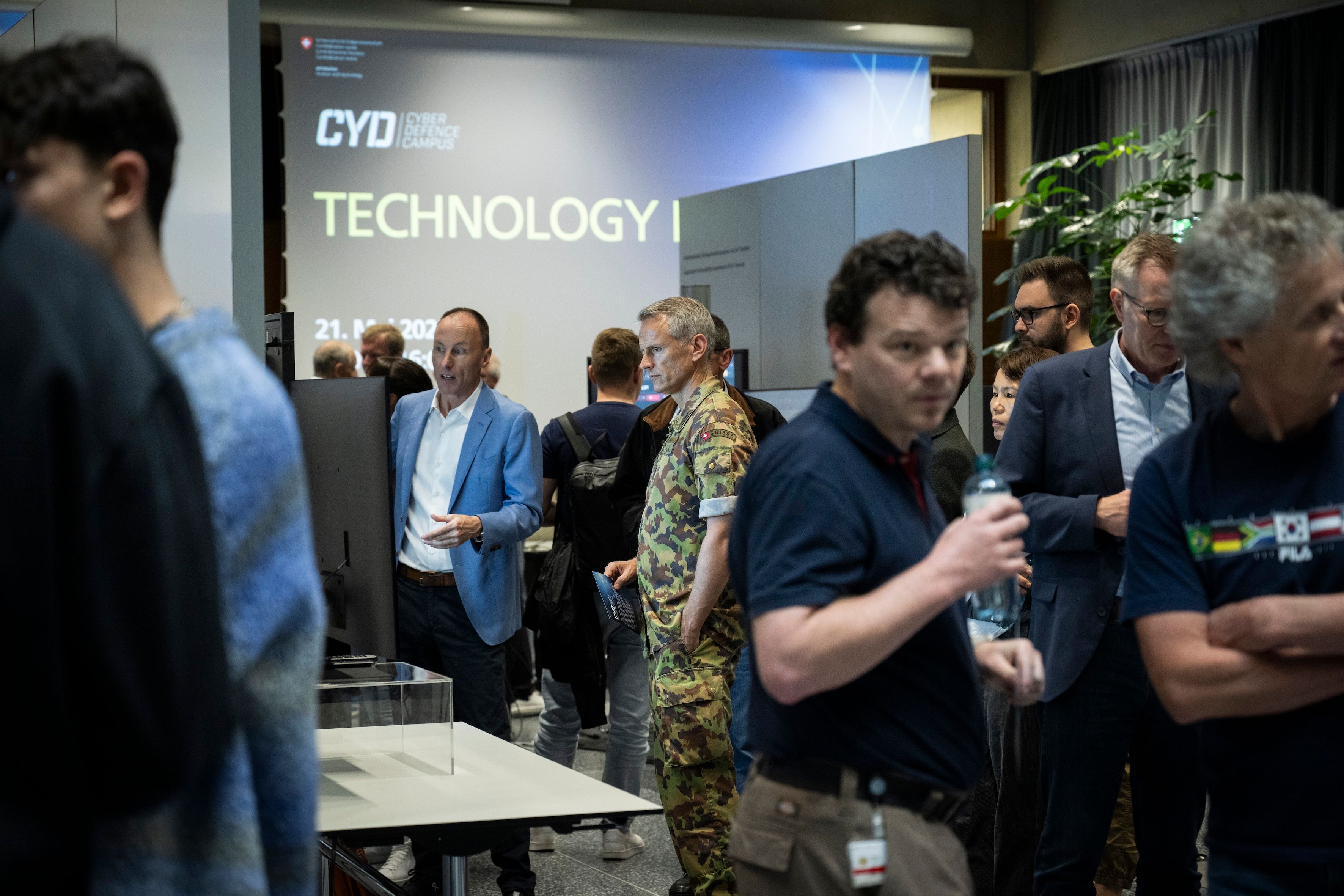
The Technology Day brought together 300 interested parties and stakeholders from the DDPS with the aim of directly linking current cyber defence challenges with technological solutions. Visitors gained exclusive insights into 14 functional demonstrators and specific areas of application, ranging from secure apps to situation analysis.
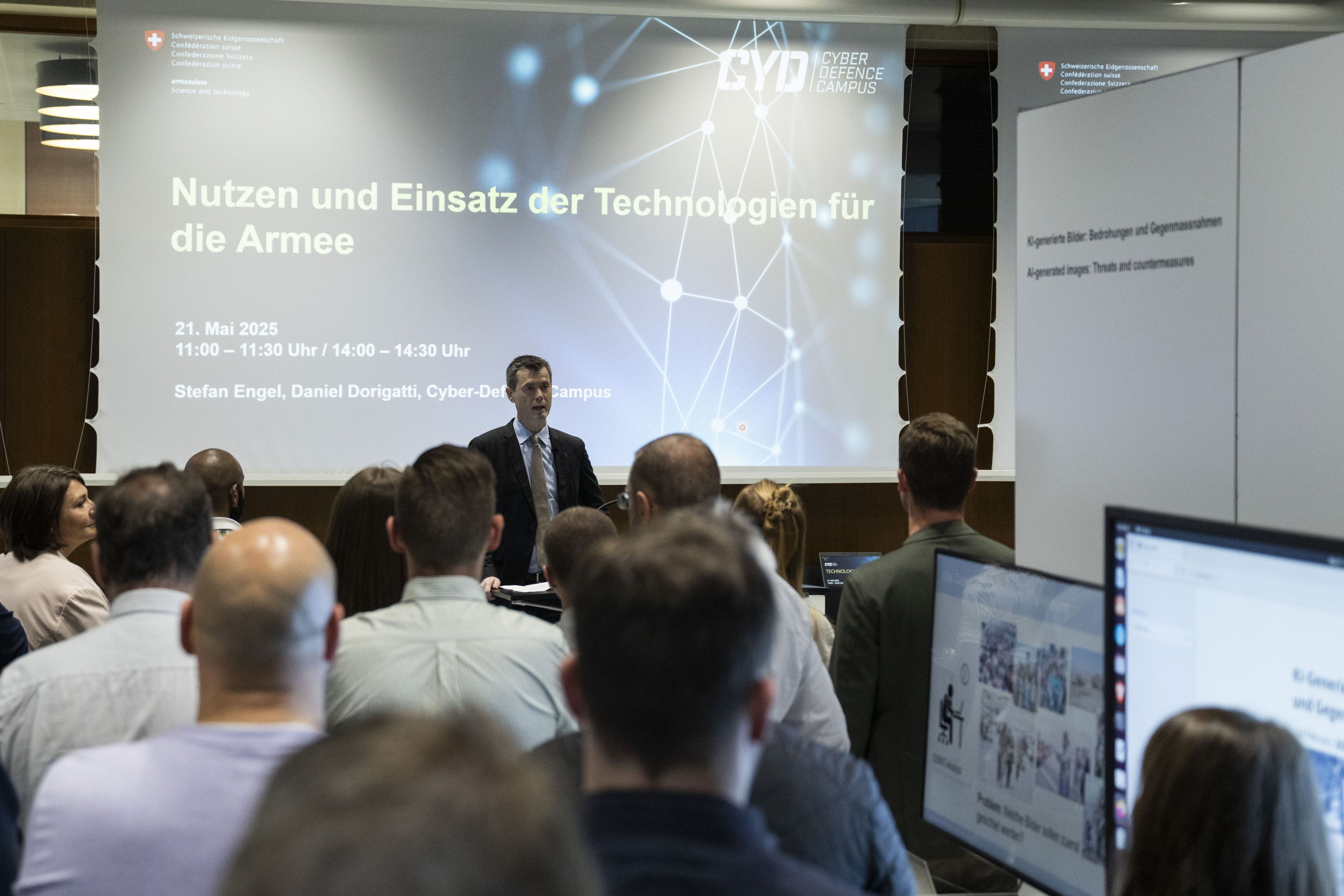
On Wednesday, 21 May 2025, the Cyber-Defence Campus hosted the Technology Day in Bern. From 10 a.m. to 4 p.m., 300 trade visitors were free to explore an exhibition of innovative demonstrators, complemented by two guided presentations. After a welcome address by Dr. Vincent Lenders, Head of the Cyber-Defence Campus, Stefan Engel, Deputy Head of the Cyber-Defence Campus, presented the benefits and possible applications of current technologies for the army and administration.
The projects presented covered a wide range of safety-related topics in five key areas.
Secure data centers:
The ‘Security of Home Automation Systems’ demonstrator showed the real simulation environment of home automation systems and allows the analysis and identification of vulnerabilities in device interfaces and firmware. Another key component of secure data centers is the ability to process large amounts of data efficiently, especially in security-relevant networks and sensor systems. The demonstrator presented for graphics processing unit (GPU)-based high-performance network analysis utilises the proven performance of graphics processors, as used in the training of AI models. The solution is not only cost-efficient, but also highly scalable and allows agile adaptation to new threat scenarios without lengthy integration processes. This lays the foundation for responsive and future-proof security architectures.
Secure applications and devices:
Four demonstrators were presented in the field of secure applications and devices. These focused on the security of applications on smartphones, the secure use of large language models (LLMs) in applications, local software code creation using artificial intelligence, and automated vulnerability analysis of Internet of Things (IoT) devices. These demonstrators show how artificial intelligence is increasingly being used for the security of applications and devices.
Operational situation centers:
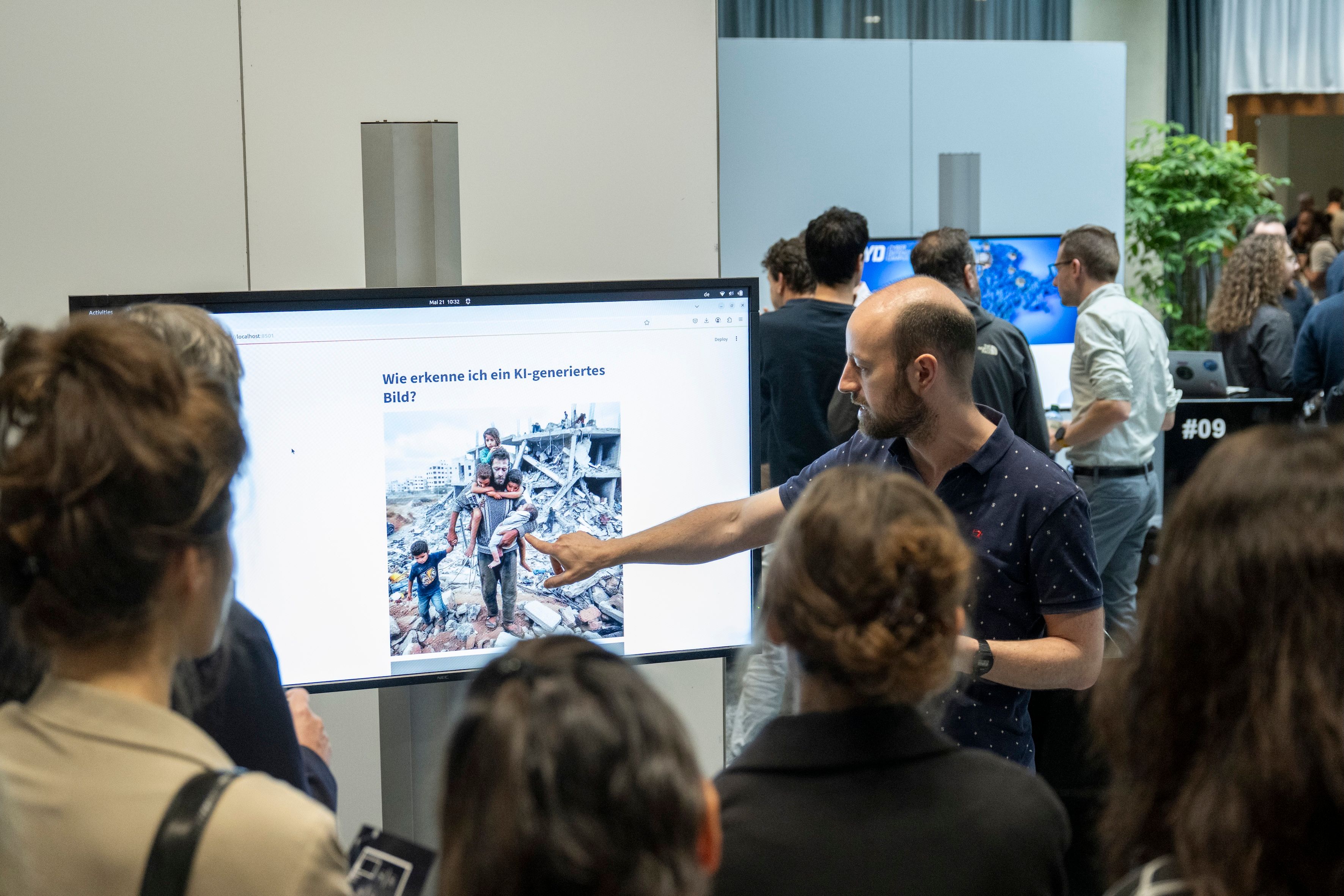
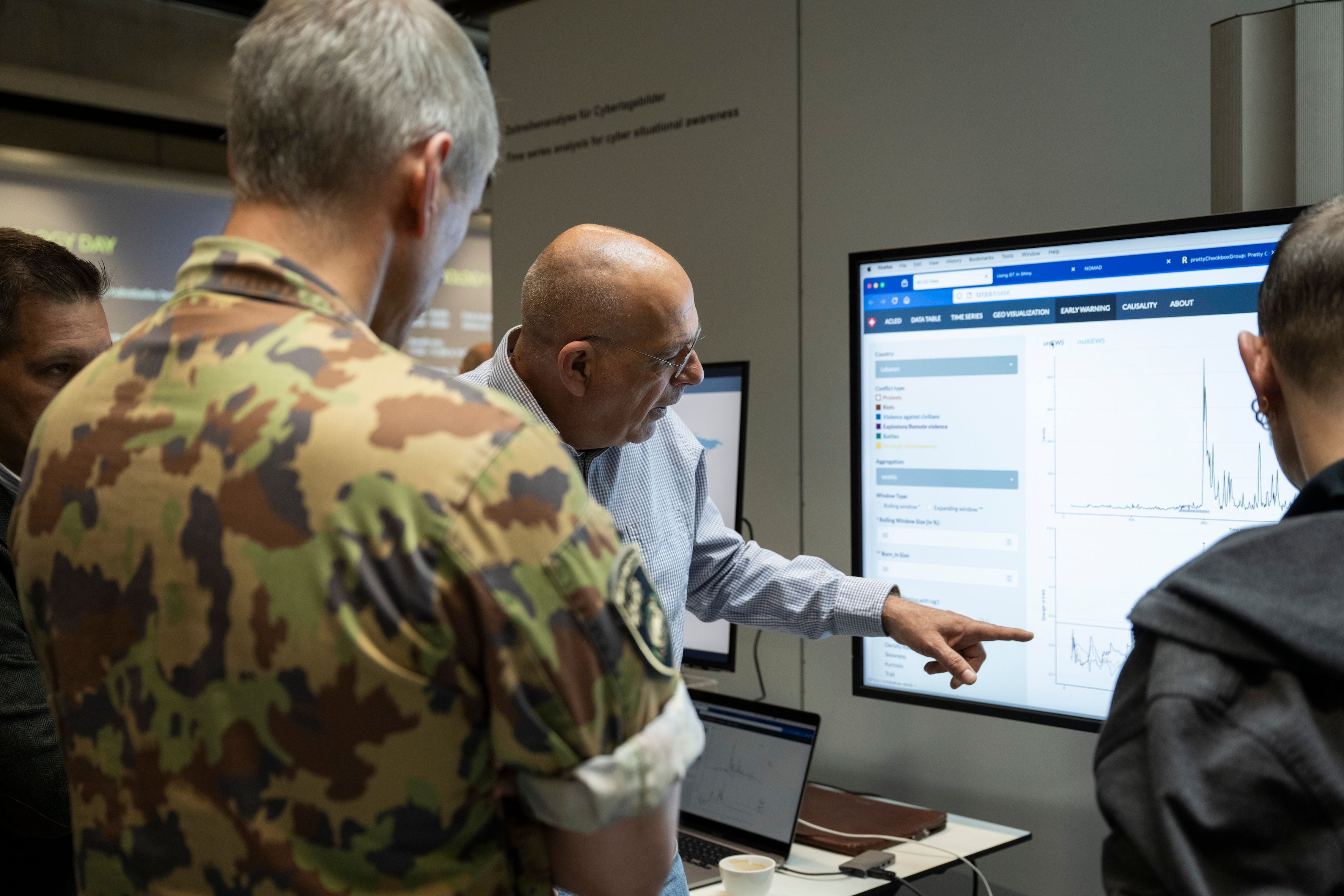
To provide operational cyber situation pictures, various demonstrators worked on collecting and analysing data from cyberspace. Examples include the real-time detection of Global Navigation Satellite System (GNSS) spoofing and jamming, AI-based machine translation, the detection of AI-generated images, time series analysis, and automatic exploit development.
Field use:
The focus was on technologies for field use that work without a connection to central systems, are autonomous, resilient and can be deployed directly in the field. One demonstrator is the collaborative learning approach for drone swarms. Individual drones can learn from specific problems and pass this knowledge on within the swarm without any connection to headquarters or the backend. This opens up new possibilities for highly autonomous, adaptive systems in areas that are difficult to access.
Another demonstrator addresses early warning in cases of physical overexertion. By evaluating sensor data from smartwatches, health conditions can be analysed and potential overexertion detected at an early stage. Data processing is carried out in compliance with data protection regulations, which is a crucial aspect for sensitive military and civilian applications. Both technologies demonstrate how modern systems can contribute directly to the safety and performance of personnel and systems in the field.
Technology and market monitoring:
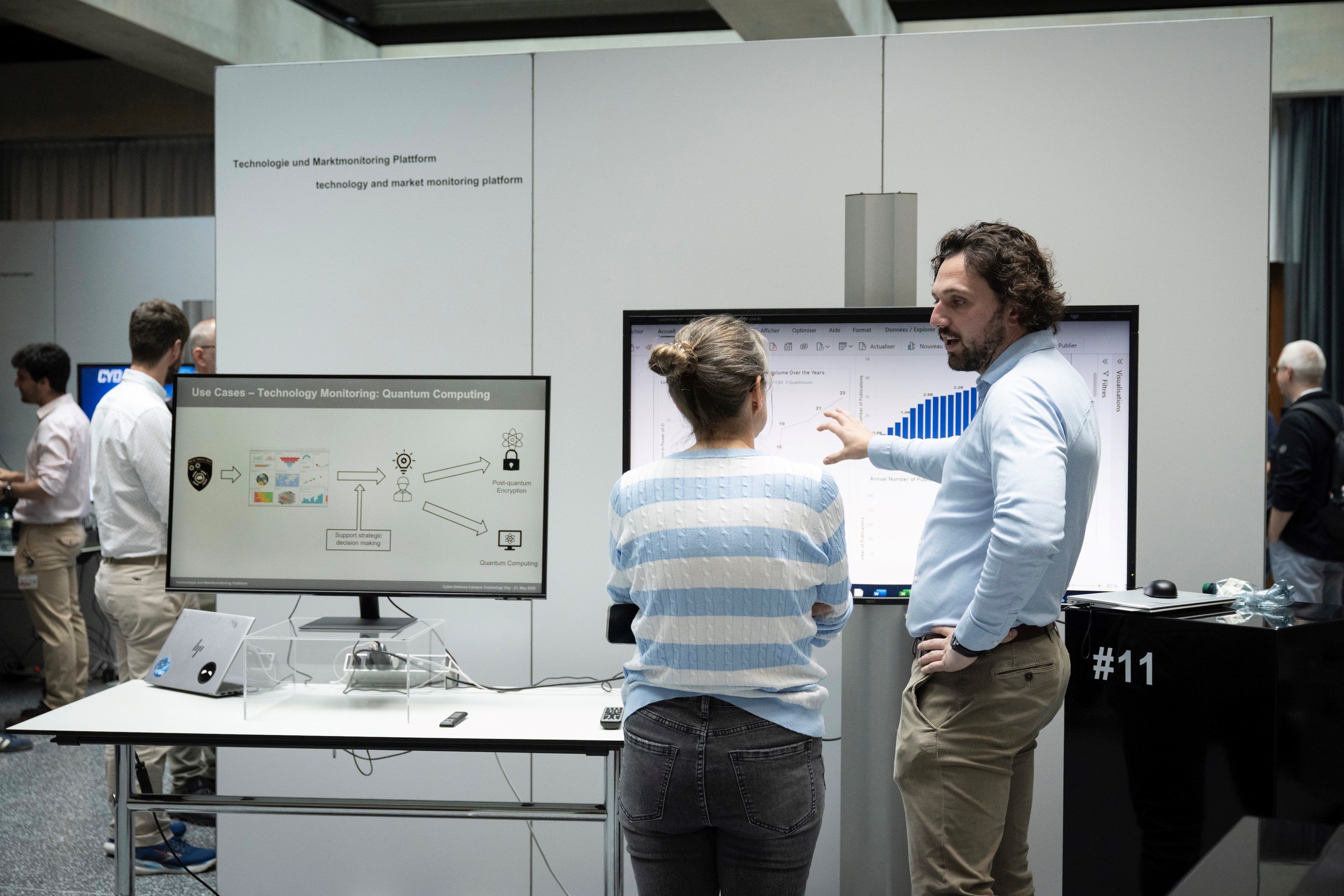
Effective procurement begins with a comprehensive overview of the current state of the art. The technology and market monitoring platform presented here supports precisely this: it enables a structured, targeted search for existing and new technologies, both in the civil and military context. The platform has a modular structure and can be easily adapted to different user groups and requirements. This makes it an indispensable tool in strategic procurement preparation for identifying technological developments at an early stage, tracking relevant trends and making informed decisions.
All contributions shared a common goal: strengthening cyber resilience through the early deployment of future-proof technologies tailored to the needs of Switzerland's security architecture. The Technology Day clearly demonstrated that effective cyber defence begins with close cooperation between research, technology development and practice.
The Cyber-Defence Campus would like to thank all visitors.