

Books
Quantum Technologies: Trends and Implications for Cyber Defense
.png?rect=328%2C0%2C844%2C844&w=1024&auto=format)
Divided in three parts, the book examines core advancements in various types of quantum technologies and also addresses the key obstacles that limit progress. It explores the potential disruptions to current cryptographic standards alongside potential solutions, as well as global quantum strategies and tools designed to monitor trends in quantum technologies.
Large Language Models in Cybersecurity

The book starts in Part I with a general introduction to LLMs and their main application areas. Part II collects a description of the most salient threats LLMs represent in cybersecurity, be they as tools for cybercriminals or as novel attack surfaces if integrated into existing software. Part III focuses on attempting to forecast the exposure and the development of technologies and science underpinning LLMs, as well as macro levers available to regulators to further cybersecurity in the age of LLMs. Eventually, in Part IV, mitigation techniques that should allow safe and secure development and deployment of LLMs are presented. The book concludes with two final chapters in Part V, one speculating what a secure design and integration of LLMs from first principles would look like and the other presenting a summary of the duality of LLMs in cyber-security.
This book represents the second in a series published by the Technology Monitoring (TM) team of the Cyber-Defence Campus. This book series provides technology and trend anticipation for government, industry, and academic decision-makers as well as technical experts.
Trends in Data Protection and Encryption Technologies
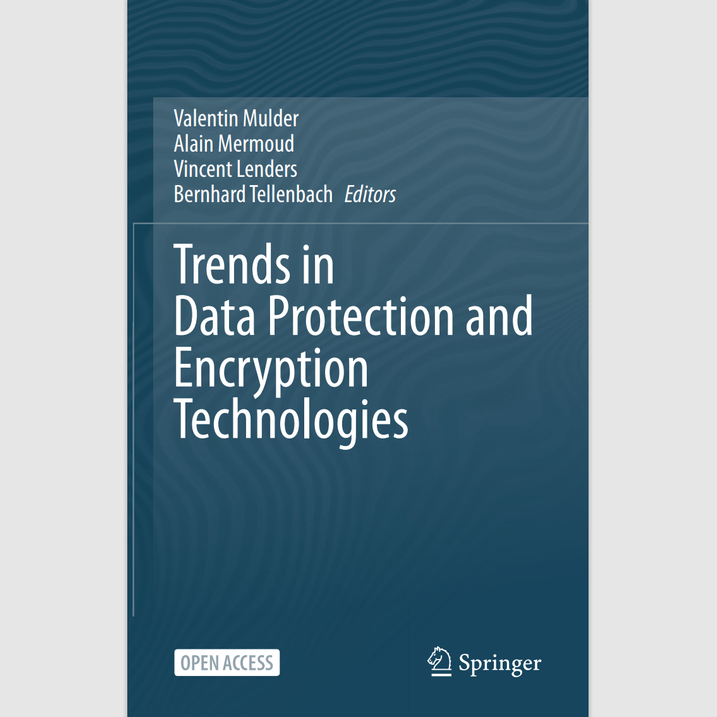
Fifty experts from academia, government, and industry have contributed to this study and provided their viewpoints on the different technologies and trends. This comprehensive collection of factsheets provides a reference for organizations and individuals that need to elaborate coherent and efficient data protection and encryption strategies in the coming years. The 38 technologies have been sorted into five categories. First, encryption foundations represent the technologies used to create other encryption applications. Second, low-level applications represent the technologies that focus on micro functionalities. Third, high-level applications represent the technologies that focus on more abstract and macro functionalities. Fourth, data protection represents the technologies used to protect data without encrypting these data. Finally, use cases represent concrete ways the different technologies can be used together to create a working solution.
The book serves as a guide for decision-making within administrations, government organizations, and industry. It will also be interesting for the tech-savvy board member or engineers looking to get an entry point into data protection topics. Last not least, the book will also be a valuable reading for anyone interested in data protection and encryption.